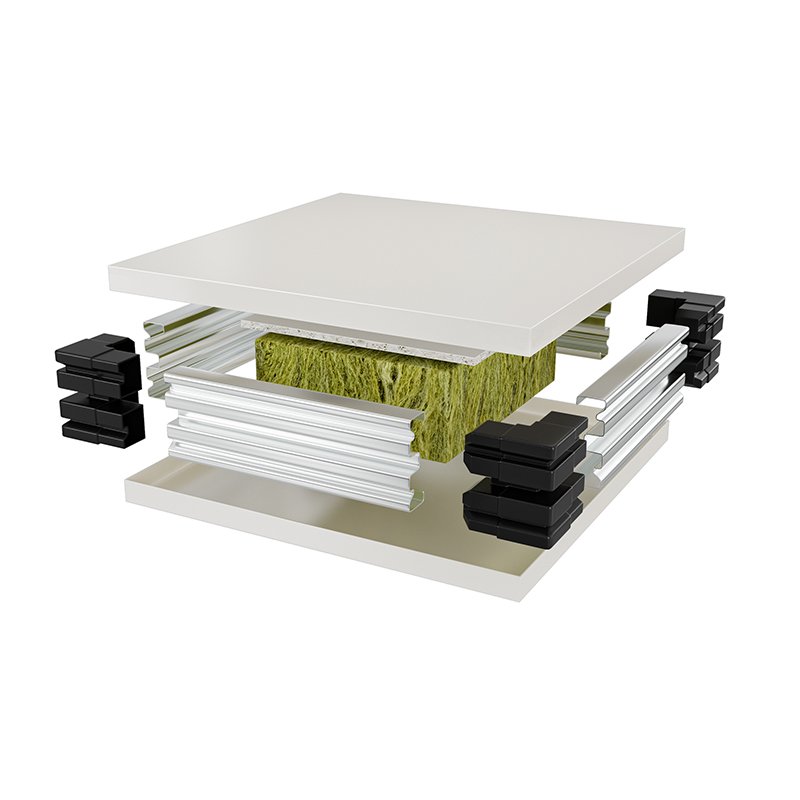
Composition
A wall system is composed of four parts: the face panel, the edge runner, the core layer and the joint. The face panel is the room-facing surface. The edge runner frames and protects the panel edge. The core layer gives the panel its body. The joint connects one panel to the next and determines how tight, how cleanable and how maintainable the finished wall is.
Handmade panels follow a general structure of upper steel face, adhesive, core layers, galvanised runner and lower steel face, finished with corner pieces. Machine-made panels follow a jointed structure in which face, core and adhesive are combined by continuous pressing and panels meet through a tongue-and-groove joint. Both structures end at the same four-part composition; they differ in how the parts are made and joined.
Joint forms
The company range lists three joint forms for handmade panels: middle-aluminium joints, tongue-and-groove style male-female joints, and blind-panel joints. The general connection methods listed for the range are male-female tongue-and-groove jointing and middle-aluminium jointing, with blind-panel ceiling jointing as a separate ceiling method. Only the names of these joint forms are published here; no joint dimension or drawing measurement is republished, and construction references remain the original drawings.
Joint choice follows room use. A joint that must be opened for service access needs a different form from a joint that will never be opened. A joint in a frequently cleaned room needs a tight, cleanable seam. State the joint requirement zone by zone in the enquiry, and confirm the joint pieces included in the delivery scope.
Send your wall layout and room list — confirm panel type, joint and colour for each ward, production or laboratory zone before you order.
Send a wall-system enquiryPlease confirm minimum order quantity and lead time before ordering.